
Home › Product Range › Delivery Bags
Delivery Bag Manufacturers in Mumbai
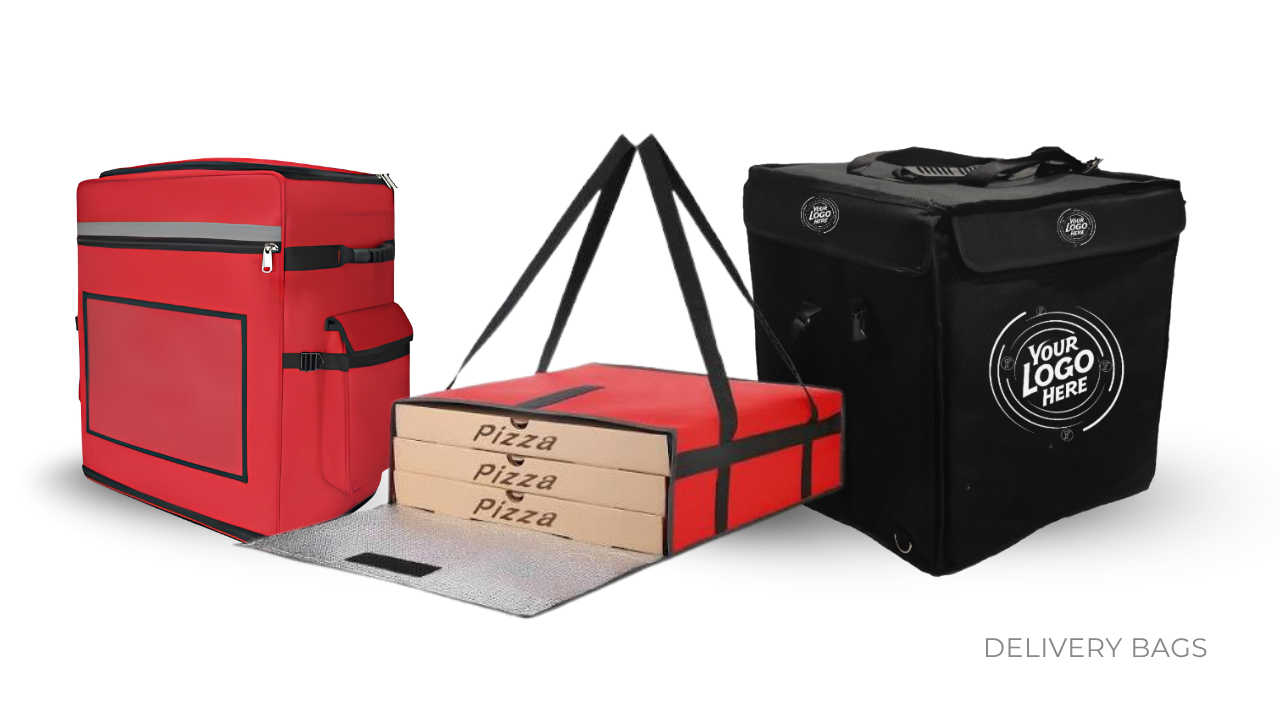
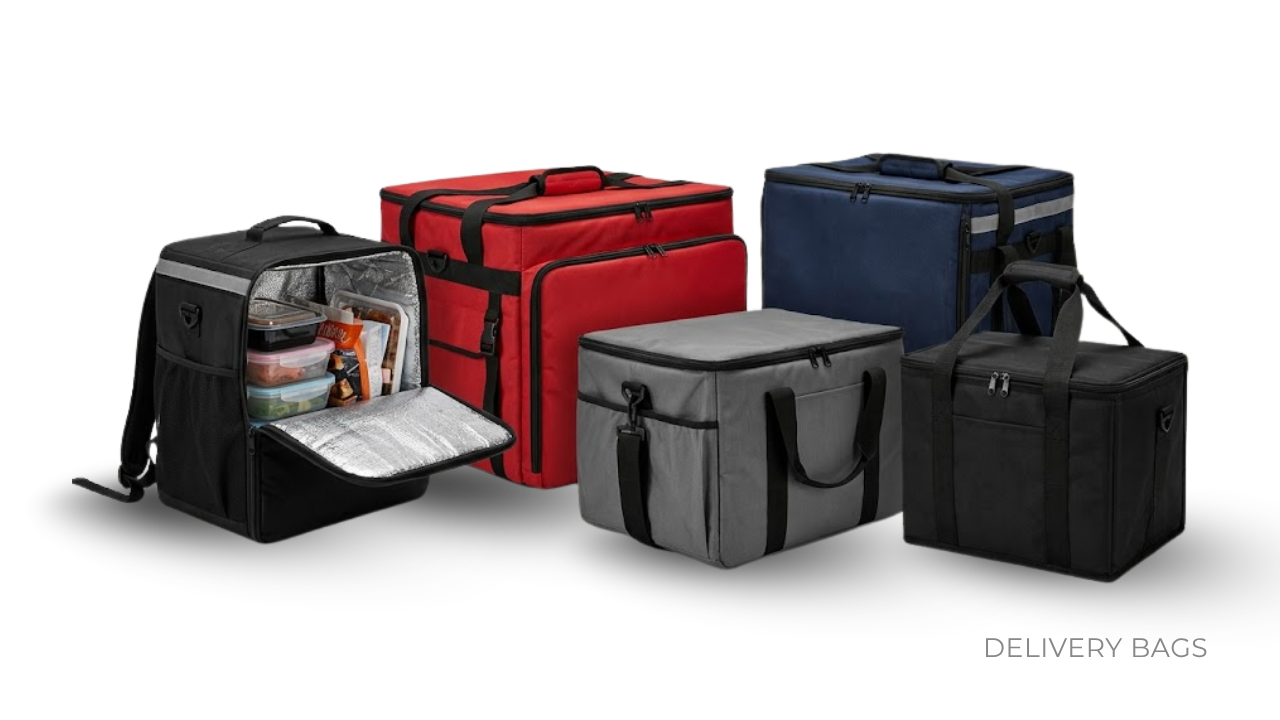
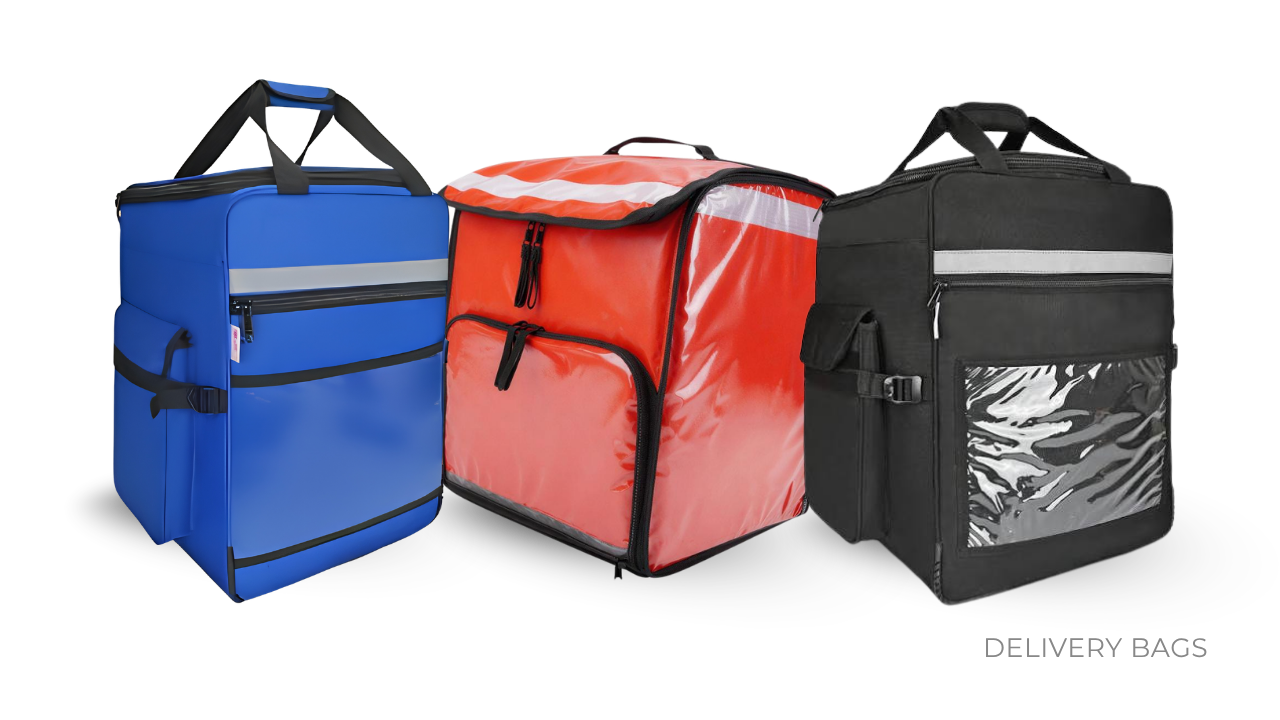
We manufacture insulated delivery bags in bulk from our own Mumbai line — rider backpacks, top-box carriers, pizza and dessert bags and cold-chain pouches, built for eight to fourteen hours a day in monsoon conditions. Sealed liners, rigid bases and fleet numbering per rider, with no fixed minimum order quantity.

Twelve Formats for Last-Mile Work.

These are commercial bags for riders and operators — heavier built, sealed and specified for daily duty. Individual lunch and tiffin carriers are a lighter build and sit with our insulated lunch bags.
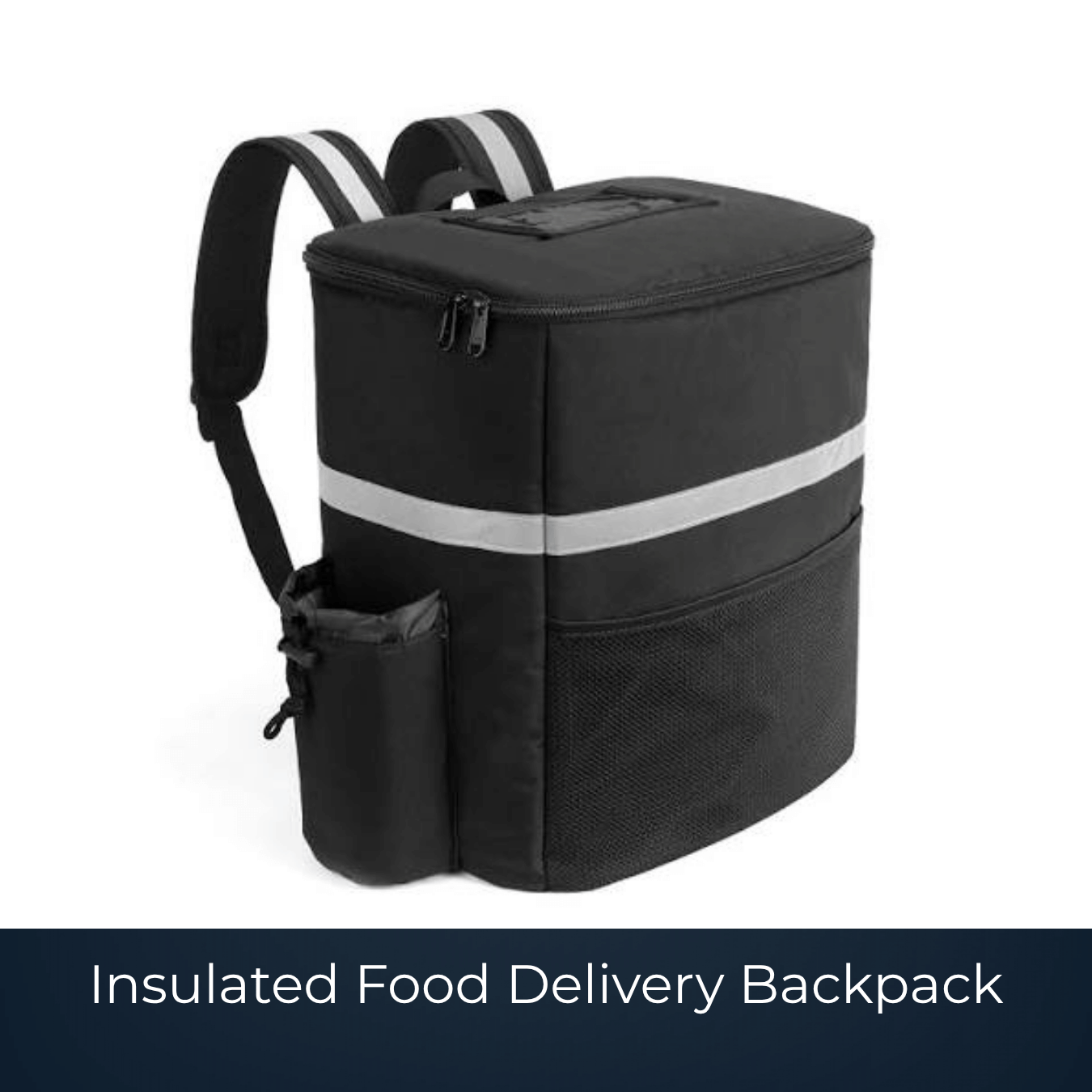
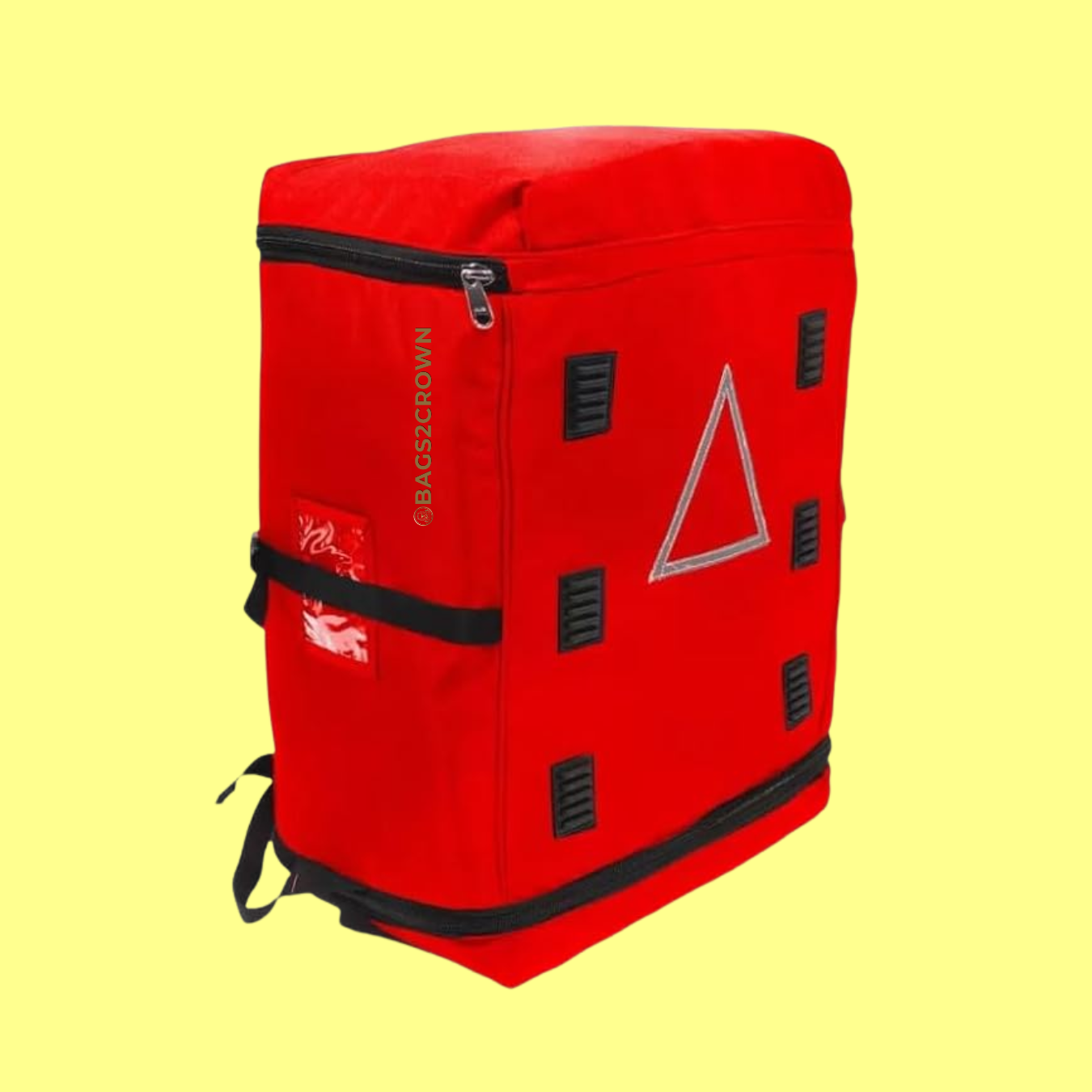
Rider Backpack Bags
Harness-carried insulated backpacks with a rigid internal frame.
Top-Box & Carrier Bags
Bags built to sit inside or strap onto a two-wheeler carrier.
Saddle & Pannier Bags
Side-mounted bags that keep the load low and the rider unloaded.
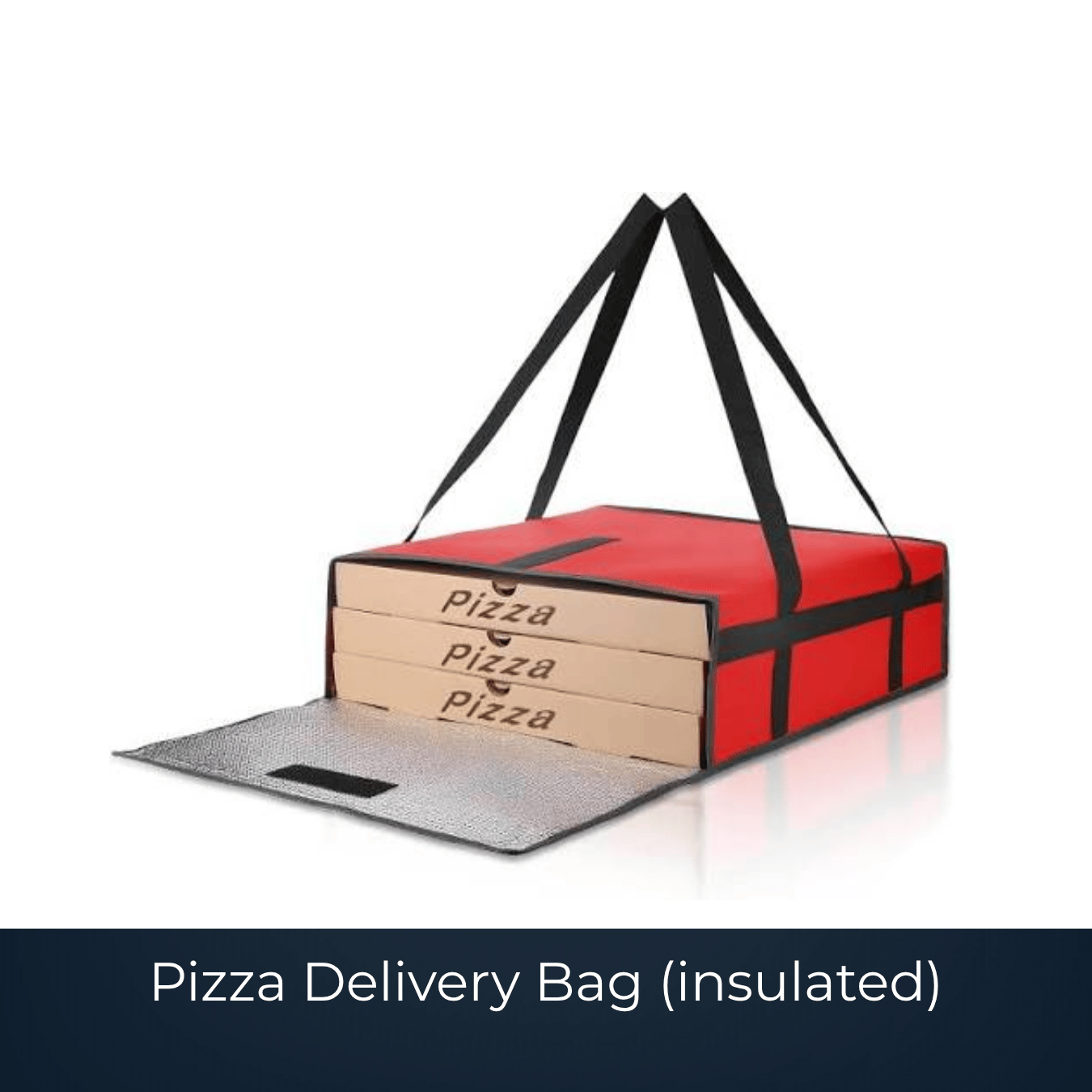
Pizza Delivery Bags
Flat, rigid carriers that hold boxes level and hold heat.
Cake & Dessert Carriers
Anti-tilt rigid bases with straps to stop movement in transit.
Beverage & Cup Carriers
Moulded or divider-set cup holders so drinks arrive upright.
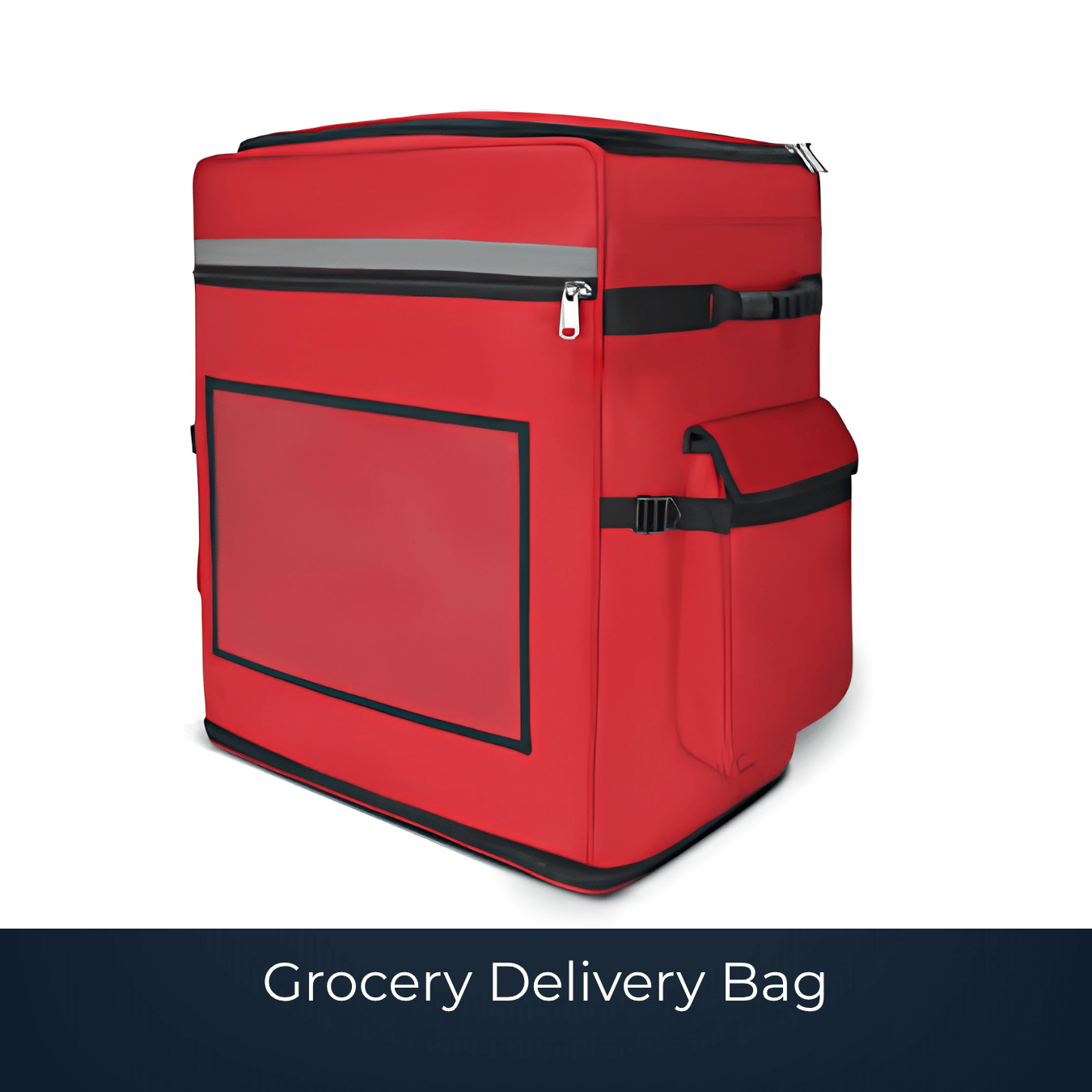
Grocery & Quick-Commerce
Large-volume bags with partitions for multi-order batching.
Insulated Hand-Carry Bags
Short-haul carriers for in-mall, campus and hotel-to-room delivery.
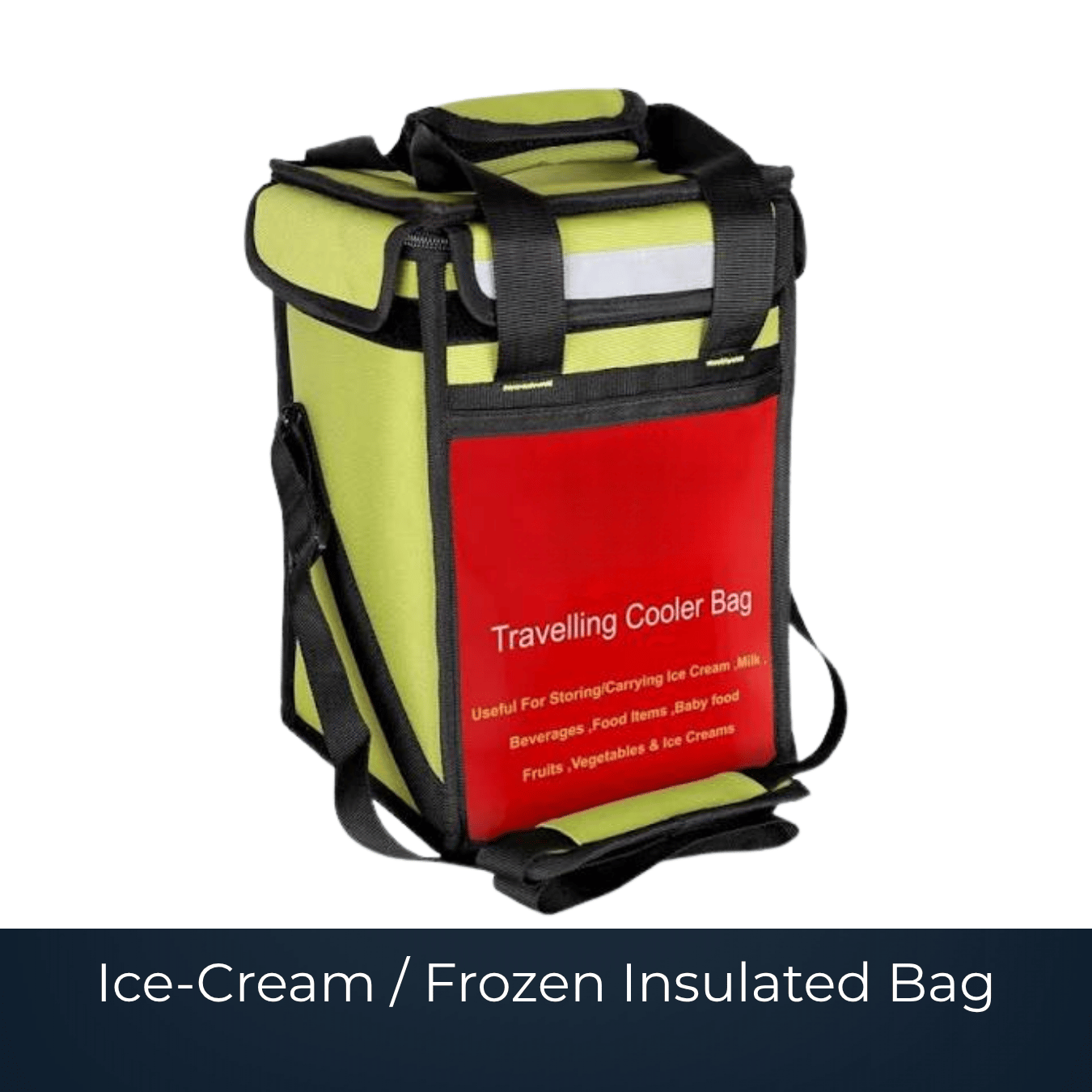
Pharmacy & Cold-Chain Pouches
Gel-pack pouches for medicines, samples and diagnostics transport.
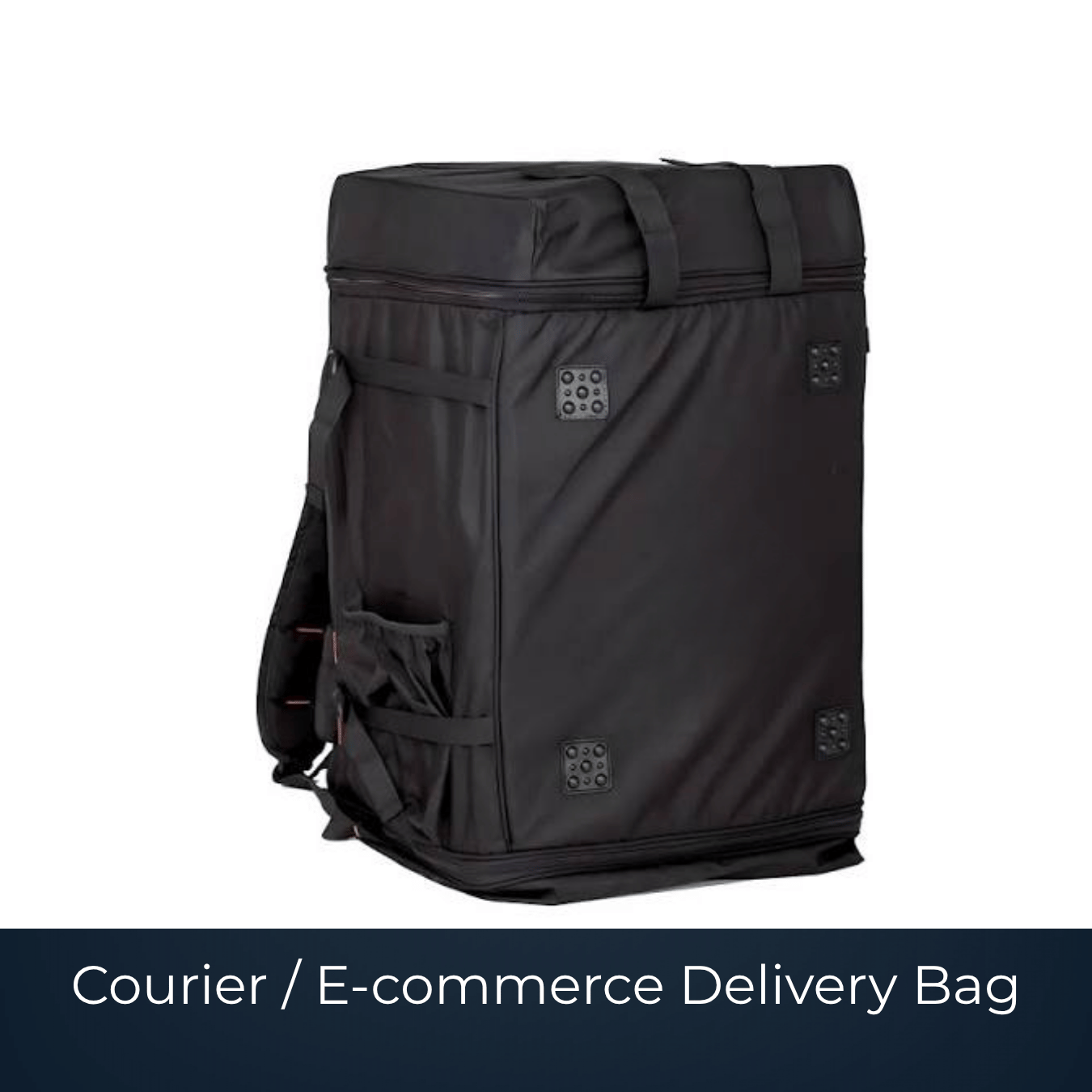
Document & Courier Bags
Weatherproof courier satchels with tamper-evident closure options.
Reusable Eco Courier Bags
Jute, cotton and recycled builds for returnable packaging schemes.
Personal Lunch Carriers
Individual tiffin and lunch bags sit with our insulated range.
Five Things Daily Use Demands.
A consumer bag might see fifty uses a year. A rider bag sees several thousand — opened on every drop, loaded over potholes, rained on for four months and cleaned every night. That is a different product, not a heavier version of the same one, and these are the five places the difference shows.
Zippers
Opened 40× a shiftA consumer bag opens twice a day. A rider bag opens on every drop. #8 or #10 gauge with reinforced end stops, and lockable sliders where the bag is left on a bike.
First thing to fail on cheap bagsLiner & Seams
Spills are routineGravy leaks. A stitched liner passes it straight through the needle holes into the foam, and the bag then smells permanently. Heat-sealed TPU liners with a removable option are the only real answer.
Specify sealed, alwaysBase Rigidity
Crush protectionA soft base lets boxes tilt and curry containers compress. HDPE or board base panels and moulded side stiffeners keep the load square.
Critical for pizza and dessertsStrap Anchoring
Loaded, on a bikeHarness anchors carry a full load over potholes. Bar-tacked, webbing-reinforced anchor points, plus chest and waist straps to stop the bag swinging.
Rider comfort is retentionMonsoon
Mumbai realityFour months of daily rain. Tarpaulin or coated body, taped seams, a storm flap over the zip and drainage eyelets so water leaves rather than pools.
Test this before fleet rolloutOn lifespan and cost: a delivery bag is a working asset, so what matters is cost per delivery, not cost per bag. A cheaper bag that fails mid-season costs you the replacement, the rider's downtime and the orders that did not go out. We will not quote you a lifespan figure we cannot stand behind — but we will tell you what fails first on any build we quote, and we would encourage you to ask every supplier the same question. Anyone who cannot answer it has not watched one of their bags in service.
What You Can Specify.
Delivery bags are operational equipment, so the specification matters more here than anywhere else in our range. This is the full list we build to — send your order profile and route conditions and we will recommend against it.
| Formats & capacity | Rider backpacks, top-box, pannier, pizza, dessert, beverage, grocery and courier formats — sized by the order profile you carry, not by litres alone. Tell us the largest single item and the busiest batch. |
|---|---|
| Insulation | EPE or PE foam from 5 mm to 15 mm, quoted by thickness. Commercial bags need more than personal carriers because they open constantly. |
| Liner | Heat-sealed TPU or PEVA, food-contact grade available on request. Removable liner option so it can be washed properly rather than wiped. |
| Seam sealing | Taped or welded liner seams to contain spills. Stitched liners leak through the needle line and the foam retains the odour permanently. |
| Structure | HDPE or board base panel, moulded or stiffened side walls, internal frame, anti-tilt platform for cakes and beverages. |
| Dividers | Removable padded partitions and adjustable dividers for multi-order batching, plus dedicated beverage cells. |
| Weatherproofing | Tarpaulin or PU-coated body, taped seams, storm flap over the zip, drainage eyelets, and a roll-top option for heavy rain routes. |
| Rider fit | Padded air-mesh harness, chest and waist straps, load lifters, and mounting straps or hook-and-loop panels for carrier and top-box builds. |
| Visibility | Reflective tape, high-visibility panels and reflective piping for night riding. |
| Cleaning | Wipe-clean surfaces, removable liners and quick-dry construction so a bag cleaned at night is usable in the morning. |
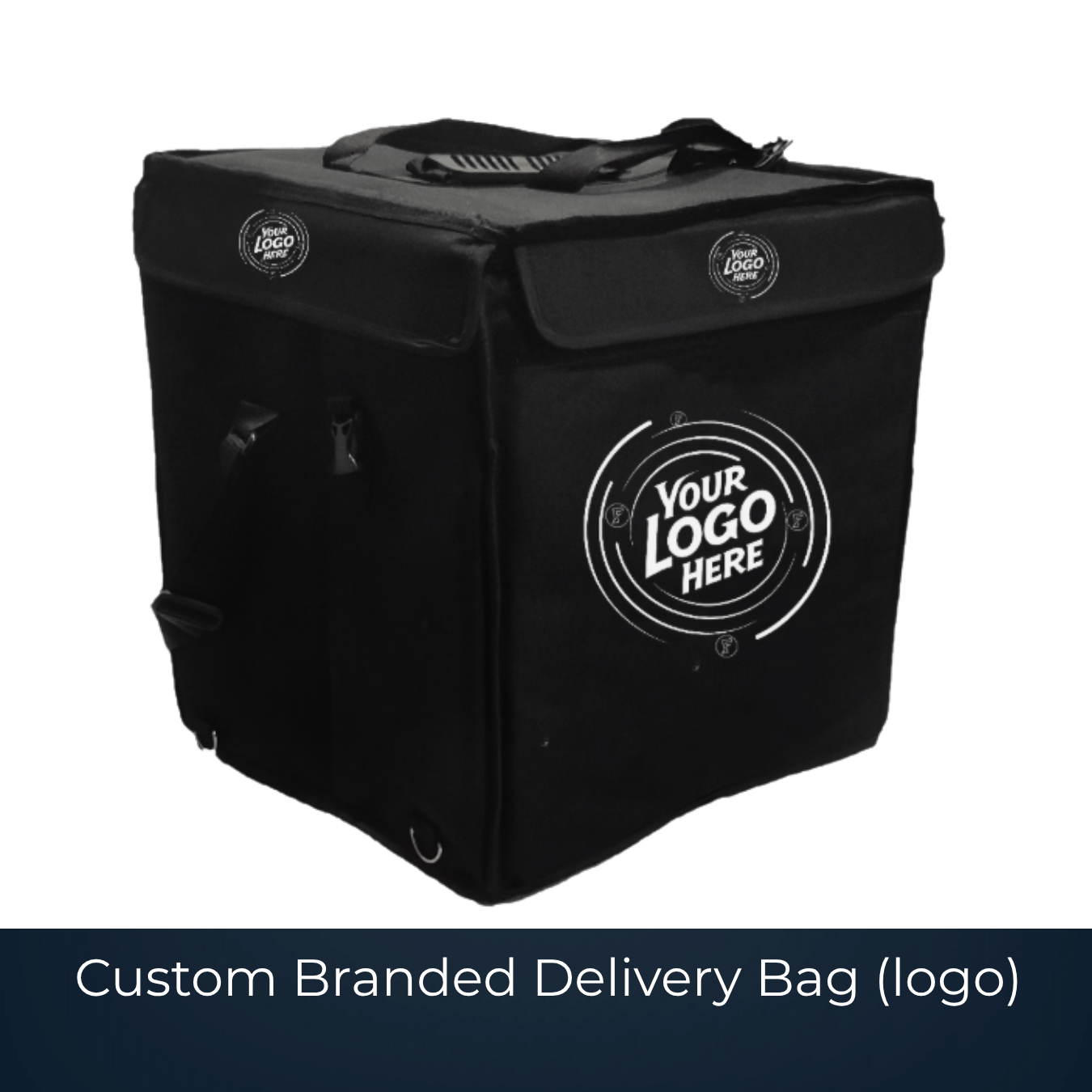
| Branding | Large-format screen print, sublimation, heat transfer or applique — plus fleet numbering per bag for issue, tracking and accountability. |
| Spares | Replacement liners, zip sliders and harness straps quoted alongside the order so a damaged bag is repaired rather than replaced. |
Trials, Cost Per Delivery & Spares
Trial Before Fleet Rollout
Take ten or twenty bags, put them on your hardest routes for a few weeks, then order the fleet. We would rather fix a spec after a real trial than supply two thousand bags and discover the harness is wrong in week three.
Cost Per Delivery, Not Per Bag
A bag that fails mid-season costs the replacement, the rider's downtime and the orders that did not go out. We will quote two build grades so you can compare unit price against expected service life properly.
Fleet Numbering & Issue
Sequential numbers or rider IDs printed per bag, packed labelled, so issue and recovery are auditable. Essential once a fleet passes a few hundred bags.
Replaceable Liners & Spares
Liners, zip sliders and harness straps supplied as spares. A soiled or torn liner is a swap, not a written-off bag — which is where most of the saving on a fleet actually comes from.
Ten Lines That Get You a Firm Price
Describe the work, not the bag. What you carry, how far, in what weather and how many times a day tells us more than any dimension will.
- Quantity — and whether you want a trial batch first
- Format — rider backpack, top-box, pannier, pizza, dessert or courier
- What you carry — largest single item and busiest batch size
- Whether beverages travel with food, and how many cups
- Insulation expectation, or the longest leg of a typical route
- Weather exposure — monsoon routes or covered only
- Rider carry method, and any two-wheeler mounting requirement
- Sealed liner and removable liner — required or optional
- Branding artwork, and whether fleet numbering is needed
- Rollout date, and whether it is phased across cities
Delivery Bags for Every Operator.
Food Delivery Platforms
Fleet-scale rider bags with platform branding and numbering.
Cloud Kitchens & Restaurant Chains
Own-fleet bags sized to your menu's packaging, not a generic box.
Quick Commerce & Grocery
High-volume bags with partitions for batched multi-order runs.
Bakeries & Dessert Brands
Anti-tilt rigid carriers so cakes arrive as they left.
Pharmacy, Labs & Diagnostics
Gel-pack cold pouches for medicines and sample transport.
Courier, Logistics & E-commerce
Weatherproof satchels and reusable bags for returnable schemes.
Built Like a Supplier You Can Re-Order From.
Delivery fleets replace bags on a cycle, and the supplier who gets the second order is the one whose first batch survived a monsoon. These are the reasons operators stay.
We Want You to Trial First
Ten bags on your worst routes beats any specification conversation. We will adjust the build on what actually breaks rather than what we assumed.
Sealed Liners as Standard Practice
We name the seam type on the quotation. Stitched liners leak into the foam and the bag never smells right again — we would rather lose the price comparison than supply that.
Built for the Monsoon, Not Around It
Four months of daily rain is the design condition here, not an edge case. Taped seams, storm flaps and drainage are specified, not offered as an upgrade.
Repairable by Design
Replaceable liners, sliders and straps, so your fleet cost curve flattens instead of repeating the full purchase every season.
Consistent Across a Phased Rollout
Approved samples, foam grade and shade references retained, so city two matches city one months later.
One Point of Contact
The same person handles your trial, quote, sample, production and dispatch — no handovers mid-rollout.
Delivery Orders We've Shipped
Start With a Rider Trial, Then Scale.
Send your order profile, route conditions and fleet size. You will get two build grades costed, a trial batch plan and a phased rollout schedule.
Fleet Sourcing Questions
Duty cycle. A lunch bag opens twice a day; a rider bag opens on every drop, carries loads over potholes, sits in rain for months and gets cleaned nightly. That means heavier zippers, sealed liners, a rigid base, reinforced strap anchors and proper weatherproofing — a different product, not a bigger one.
We treat four months of daily rain as the design condition rather than an edge case. Tarpaulin or PU-coated body, taped seams, a storm flap over the zip and drainage eyelets so water leaves instead of pooling in the base. For heavy-rain routes a roll-top closure seals better than any zip.
Almost always a stitched liner. Spilled gravy passes through the needle holes into the foam, and foam cannot be cleaned — so the odour is permanent. Heat-sealed liner seams stop the path, and a removable liner lets you wash it properly rather than wipe it. This is the single most common failure we are asked to fix.
We would prefer it. Take ten or twenty, run them on your hardest routes for a few weeks, and tell us what broke or annoyed the riders. We adjust the build and then supply the fleet. It is far cheaper than discovering a harness problem across two thousand bags.
We will not give you a figure we cannot stand behind, because it depends on route conditions, load, riders and cleaning discipline. What we will do is tell you what fails first on the build we are quoting, and quote a higher grade alongside so you can weigh unit price against service life. Ask every supplier the same question — the answers are revealing.
Yes — sequential numbers or rider IDs printed per bag and packed labelled, so issue and recovery are auditable. Once a fleet passes a few hundred bags this stops being optional.
With the right internal structure, yes. Dedicated beverage cells or moulded cup holders keep drinks upright and separated so a spill does not reach the food. Tell us how many cups a typical order carries and we will size the cells to it.
Yes — replacement liners, zip sliders and harness straps quoted alongside the order. On a fleet this is where the real saving sits: a soiled liner becomes a swap rather than a discarded bag.