

School Bag Sizes by Age: Nursery to Class 13
School Bags9 min readUpdated 27 Oct 2026
What size school bag does each age group need?
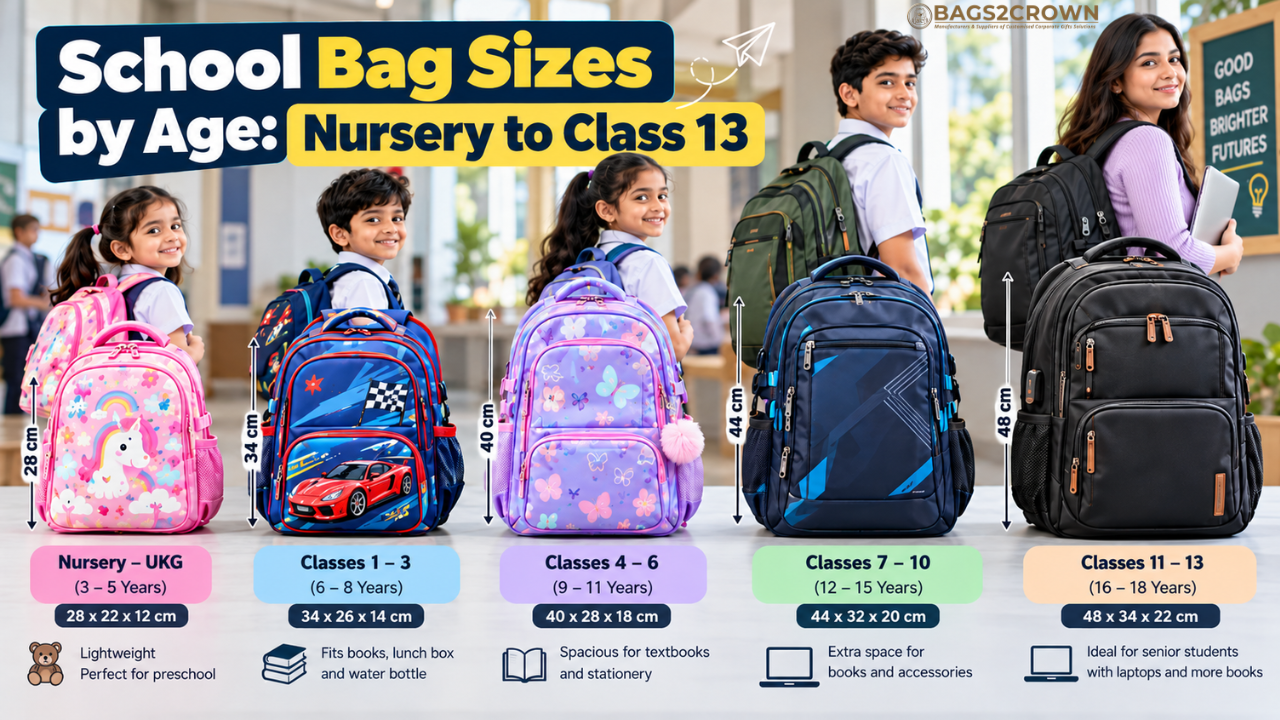
Match the bag to the child, not the syllabus. Nursery children need only a small, light carry bag; Classes 1–4 need a compact backpack that ends above the waist; Classes 5–10 need a medium-to-large multi-compartment bag with padded straps; senior students can use a full-size backpack. For Classes 1–10, a packed bag should stay within about 10% of body weight.
School bag sizes should follow the child’s age, height and daily load, not just the number of textbooks on the timetable. When a school, distributor or CSR programme orders one bag for every class, nursery children end up carrying oversized backpacks while Class 10 students overstuff bags that were never built for their books. Getting the size right at the ordering stage costs nothing extra, and it is the simplest way to avoid complaints from parents once the bags are handed out.
This guide explains how school bag sizes should change from nursery to the senior classes, what each age group actually carries, and how to brief a manufacturer so every section of your school gets the right bag. It is based on how schools and institutions order custom school bags from our factory as a school bag manufacturer in Mumbai since 1989.
School Bag Sizes by Age: Quick Comparison
| Age group | Classes | Bag format | Build | Fit check |
|---|---|---|---|---|
| About 3–5 years | Nursery, Jr KG, Sr KG | Small backpack or sling | One main pocket, bottle pocket, light fabric | Sits between the shoulder blades |
| About 6–9 years | Classes 1–4 | Compact backpack | Main and front pocket, side bottle pockets, padded straps | Top below the shoulders, base above the waist |
| About 10–13 years | Classes 5–8 | Medium backpack | Two main compartments, organiser, padded back | Ends at or just above the waist |
| About 14–15 years | Classes 9–10 | Large backpack | Multi-compartment, reinforced base, supportive back panel | No wider than the torso, rides high |
| 16 years and above | Class 11 onwards, junior college | Full-size backpack | Multi-compartment, optional device sleeve | Adult-style fit |
Ages are approximate and vary by board and school. The table describes formats and fit rather than fixed litre ratings, because the right capacity depends on the books, tiffin and bottle your students actually carry. When you order, share the student count per class and the typical daily load, and the bags are sized to that specification.
Why School Bag Sizes Matter for Schools and Parents
The Ministry of Education’s School Bag Policy 2020 recommends that a school bag for Classes 1 to 10 should weigh no more than about 10% of the student’s body weight, and that pre-primary children should not carry a school bag at all. The policy also asks schools to cut load through lockers and lighter notebooks. The bag itself plays its part too:
- Oversized bags invite overpacking: spare volume gets filled with books that could have stayed in school.
- Undersized bags create extra carry bags: students add a second bag for the tiffin or sports kit, which is worse for posture.
- Poor fit causes strain: a bag that hangs below the waist pulls the shoulders back and the head forward.
- One size for all classes leads to complaints: what suits Class 9 is far too big for Class 2, and parents notice on day one.
For bulk orders, planning school bag sizes section by section also makes distribution easier, because cartons can be packed and marked class-wise.
Nursery and KG Bags (Pre-Primary)
Pre-primary children do not need to carry books, so the bag is really a carrier for a tiffin box, a water bottle, a change of clothes and the communication diary. The priorities are a light empty weight, small dimensions and a design children enjoy.
- A small backpack or a school sling bag with one main compartment and a wide zip opening that small hands can manage.
- A side bottle pocket so the bottle does not crush the tiffin.
- Soft, padded straps short enough for the bag to sit between the shoulder blades.
- A space or label for the child’s name.
- Bright, cheerful prints. Our nursery cartoon-printed school bags use original artwork only; we do not reproduce licensed characters without written authorisation from the rights holder.
Many schools pair the nursery bag with a matching tiffin bag. A school sling bag is another option for younger children who carry only a diary and a snack.
School Bags for Classes 1 to 4
Primary students start carrying textbooks and notebooks, but they are still small. A compact backpack works best:
- The top of the bag sits below the shoulder line and the base rests above the waist.
- Two compartments: one for books and a front pocket for the pencil box and stationery.
- Bottle pockets on both sides help balance the weight.
- Padded ergonomic shoulder straps with a generous adjustment range, since children grow through the year.
- A light polyester body, so the empty bag adds little to the daily load.
Avoid ordering a larger bag “so it lasts longer”. A Class 1 child will not grow into a Class 5 bag comfortably, and the extra space only adds weight and encourages overpacking.
School Bags for Classes 5 to 8
Middle school brings more subjects, more notebooks and, on some days, an atlas, geometry box and sports kit. This is where a well-organised medium backpack earns its cost:
- Two main compartments to keep books apart from the tiffin and kit.
- An internal organiser for pens, a calculator and the school diary.
- A padded, supportive back panel that spreads weight evenly.
- Reinforced, bar-tacked strap joints, because daily loads are rising.
- Reflective trims for students who walk or cycle early in the morning or in the evening.
Many schools standardise colour at this stage so the bags match the uniform. Body and trim colours can be matched to your school’s shade card or a sample.
School Bags for Classes 9 and 10
The board exam years bring the heaviest daily loads. The bag needs more capacity, but it still has to sit high and close to the back:
- A larger multi-compartment backpack with a reinforced base.
- Wider, well-padded straps and a supportive back panel.
- A width that stays within the student’s shoulders.
- Durable fabric at the heavier end of the range, such as 1200D polyester or waterproof nylon.
- A rain cover for monsoon commutes. See our waterproof school bags with rain cover.
If your students carry heavy loads over long commutes, specify drop, snatch and load-bearing parameters when you enquire, so the pre-production sample can be tested against them before you approve the bulk run.
Senior Classes and Junior College (Class 11 Onwards)
Senior students have adult-sized frames and often carry a laptop or tablet alongside their books. A full-size backpack suits this group, and many institutions prefer a cleaner, less “school” look:
- A full-size multi-compartment backpack with a padded device sleeve.
- An understated design, branded with embroidery or a woven label rather than a large print.
- Colleges can also choose from our custom backpacks or laptop bags, which use the same in-house branding methods.
How to Check School Bag Fit: A Simple Checklist
- The top of the bag sits just below the shoulder line.
- The base sits at or above the waist, never on the hips.
- The bag is no wider than the child’s torso.
- Both straps are worn and tightened so the bag rides close to the back.
- The heaviest books are packed closest to the back panel.
- For Classes 1–10, the packed bag stays within about 10% of the child’s body weight.
Share this checklist with parents when the bags are distributed. It heads off most comfort complaints before they start.
Which School Bag Sizes Should Your School Order?
For most schools the answer is three or four school bag sizes rather than one:
- Pre-primary: a small backpack or sling with room for the tiffin and bottle.
- Classes 1–4: a compact backpack with two compartments.
- Classes 5–8: a medium backpack with an organiser and padded back.
- Class 9 and above: a large multi-compartment backpack, with a device sleeve for the senior classes.
If the budget allows only two sizes, split at Class 5: a compact bag for primary and a larger bag for everyone above. For government and CSR programmes that need one economical bag across several classes, size it for the youngest class covered and keep the build light. Our low-cost bulk school bags are built for exactly these programmes.
Ordering Class-Wise School Bags from BAGS2CROWN
BAGS2CROWN has been manufacturing bags in Mumbai since 1989, with our office in Sion (W) and our production unit in the Dharavi cluster. We are a manufacturer, not a trader. We make school bags in 600D to 1200D polyester and waterproof nylon, sized by age band to your specification so school bag sizes follow your own class structure, with branding done in-house and no fixed minimum order quantity. One order can be split by grade, with bags numbered or sectioned by class and cartons marked by grade, branch or centre.
A branded pre-production sample comes first, and its cost is adjusted against your confirmed order. Bulk production runs 7–10 days from the approved sample and materials, with delivery across Mumbai, Thane, Navi Mumbai, all of Maharashtra and pan-India.
Ready to order? Send your student count per class, branding, delivery city and required-by date on WhatsApp, call +91 93244 31717 or email kasif@bags2crown.com. You can also browse our full range of bulk school bags.
School Bag Sizes: FAQs
The questions schools and distributors ask us before ordering school bags class-wise.
What size school bag should a nursery child use?
A small backpack or sling bag with one main compartment and a bottle pocket. Pre-primary children carry only a tiffin, a bottle, a diary and a change of clothes, so the bag should be light and sit between the shoulder blades.
How heavy should a school bag be?
The School Bag Policy 2020 recommends that a packed school bag for Classes 1 to 10 should weigh no more than about 10% of the student’s body weight. Choosing the right size helps, because a smaller bag discourages overpacking.
Can one order include different bag sizes for different classes?
Yes. Orders can be split by grade, with bags sized by age band, numbered or sectioned by class, and cartons marked by grade, branch or centre for easy distribution.
What is the minimum order quantity for school bags?
BAGS2CROWN has no fixed MOQ. Orders range from small batches to tens of thousands of bags. Share your student count per class and we will send a slab-rate quote.
Can we see a sample of each size before bulk production?
Yes. We make a branded pre-production sample for approval, which you can load-test before sign-off. The sample cost is adjusted against your confirmed order.
How long does a bulk school bag order take?
Bulk production runs about 7–10 days from the approved sample and materials. Phased delivery against an agreed schedule is available for large or multi-branch orders.
Delivery coverage
Dispatched from our Mumbai unit. Direct delivery across Mumbai and Maharashtra; transport arranged pan-India against your instructions.
Phased delivery against a schedule is available for institutional and programme orders — useful where storage at your end is limited.
Speak to the factory, not a call centre
Send quantity, branding requirement, delivery city and the date you need stock by. You will get a costing and a realistic production window back.
In-house manufacturing in Mumbai since 1989.
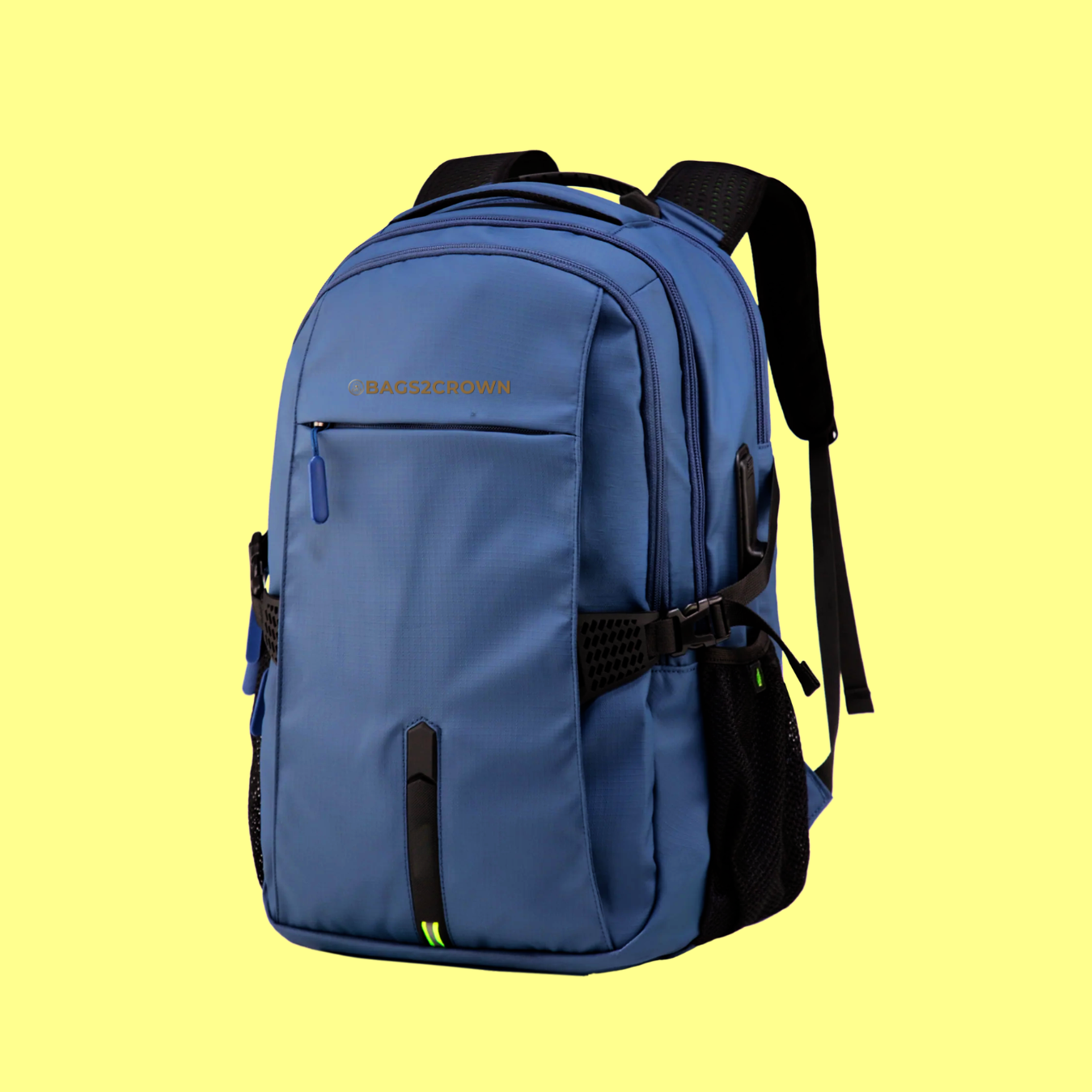 BackpacksCorporate, laptop and campus backpacks in bulk, branded with your logo.View Products
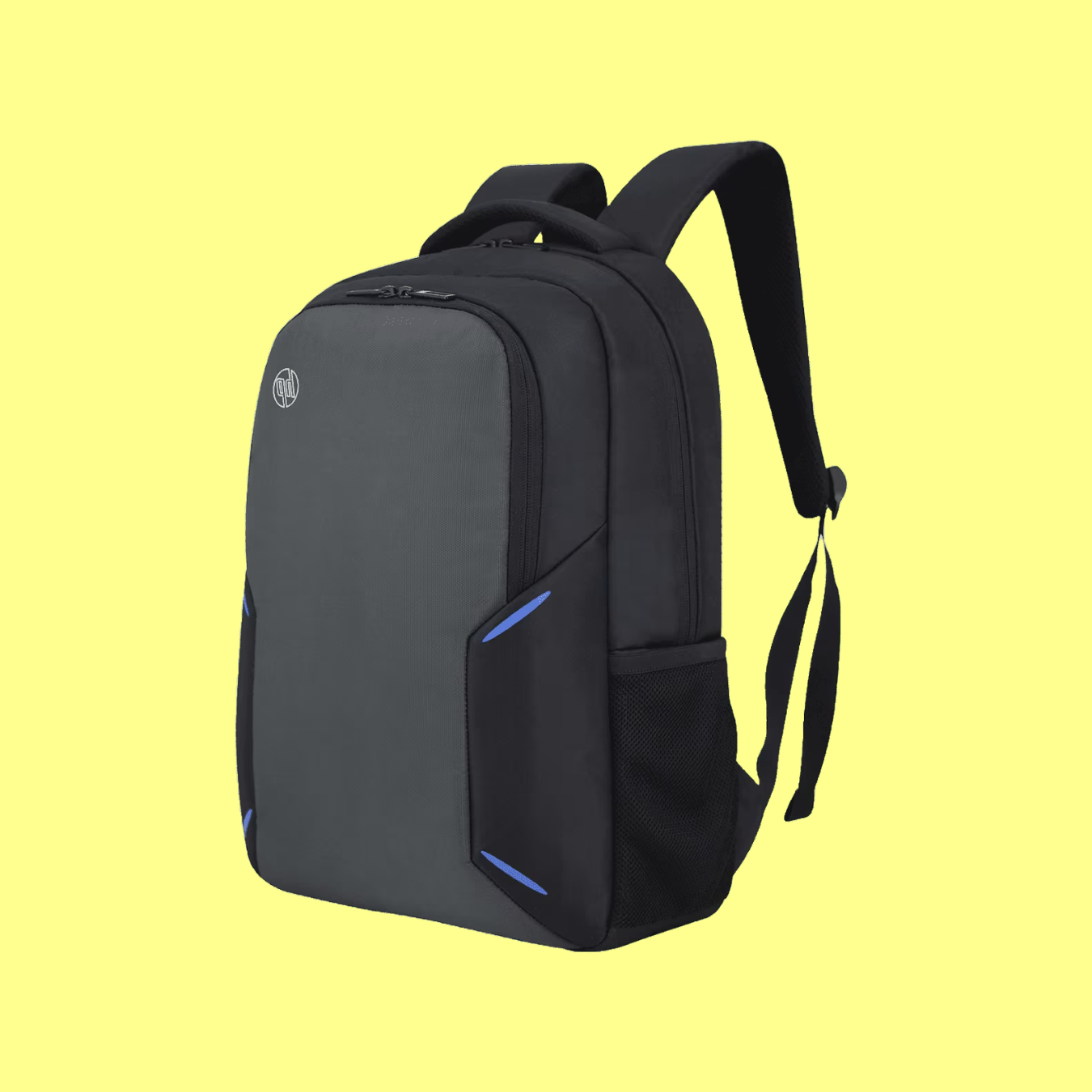 Laptop BagsPadded sleeves, messengers and briefcases for office and IT rollouts.View Products
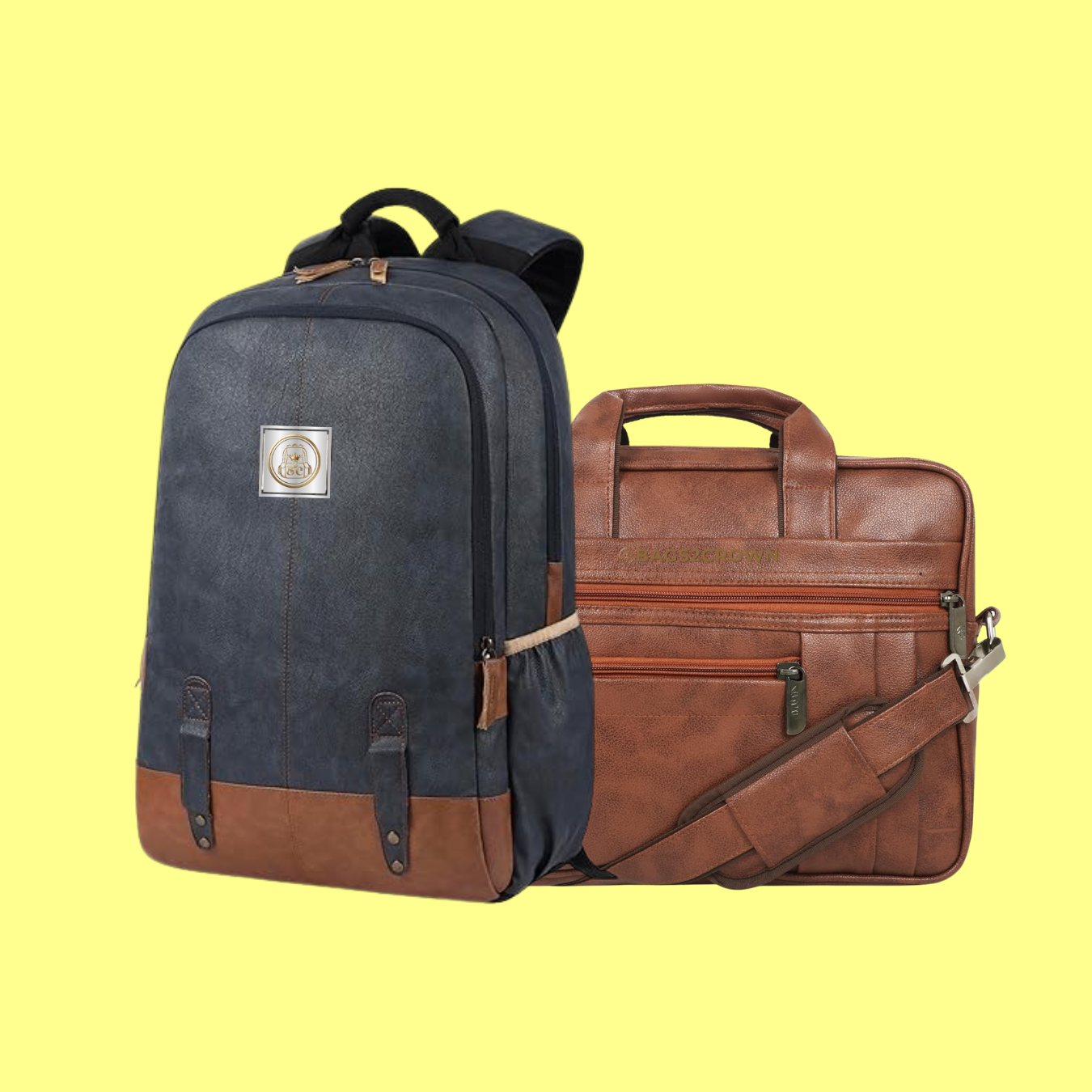 Office BagsProfessional portfolios and document bags for daily corporate use.View Products
 Leather BagsGenuine and PU leather bags with premium finish for gifting and export.View Products
 Duffle BagsGym, travel and weekender duffles built for repeat heavy use.View Products
 Trolley BagsWheeled cabin and check-in luggage in custom sizes and colours.View Products
 Travel BagsCabin-friendly travel bags for hotels, tour operators and corporate trips.View Products
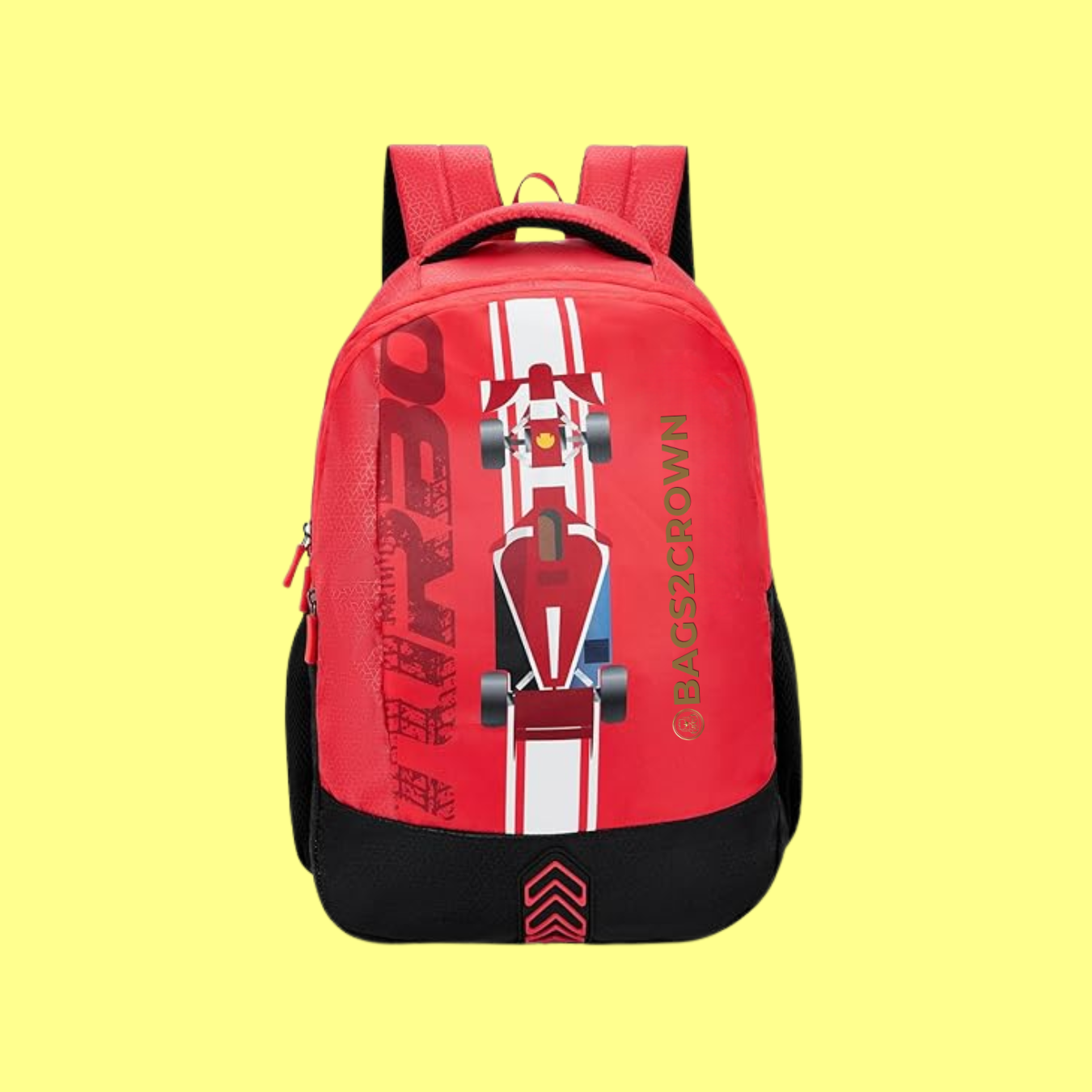 School BagsDurable school bags and stationery pouches supplied in bulk, on schedule.View Products
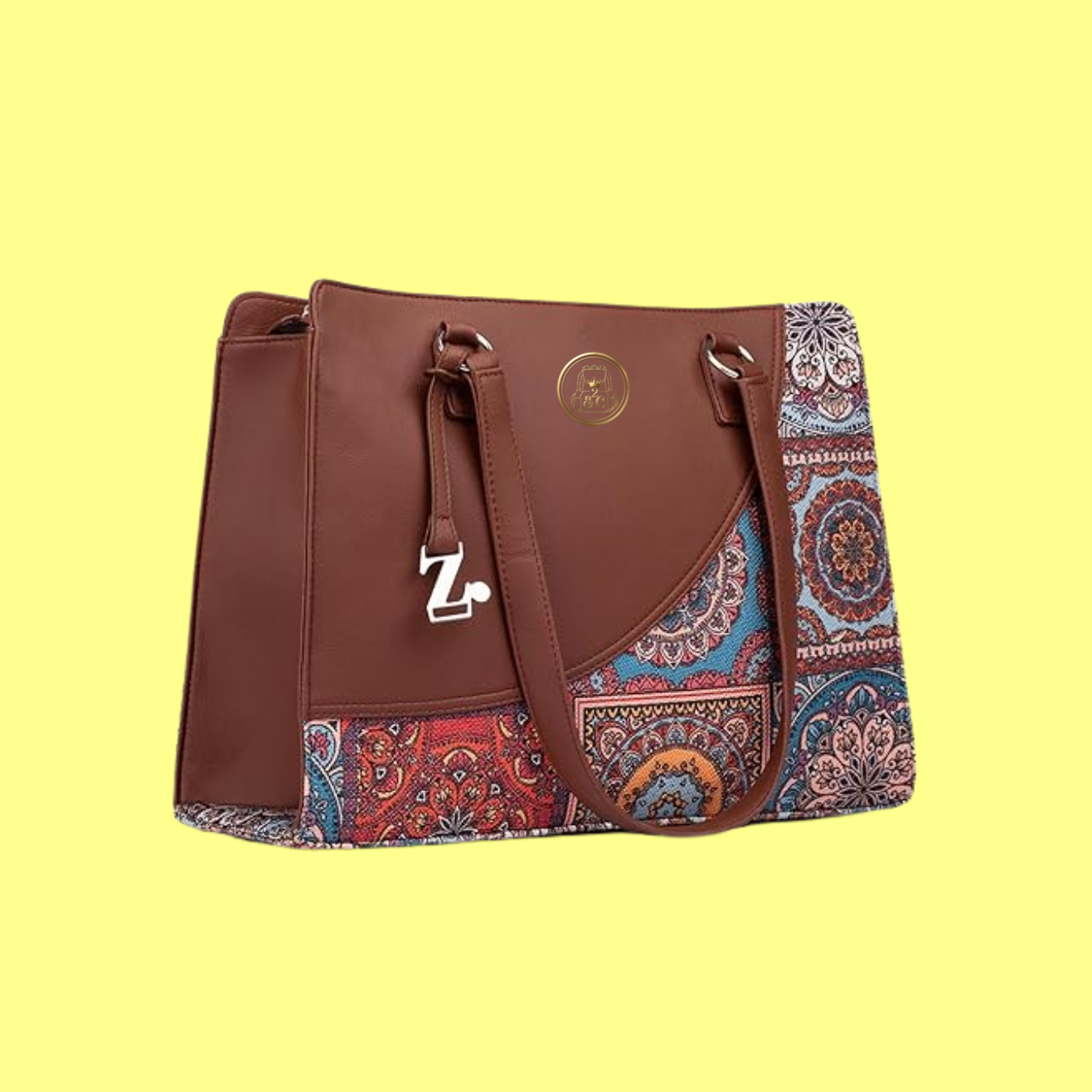 Ladies BagsHandbags, totes and slings in fabric, PU and leather finishes.View Products
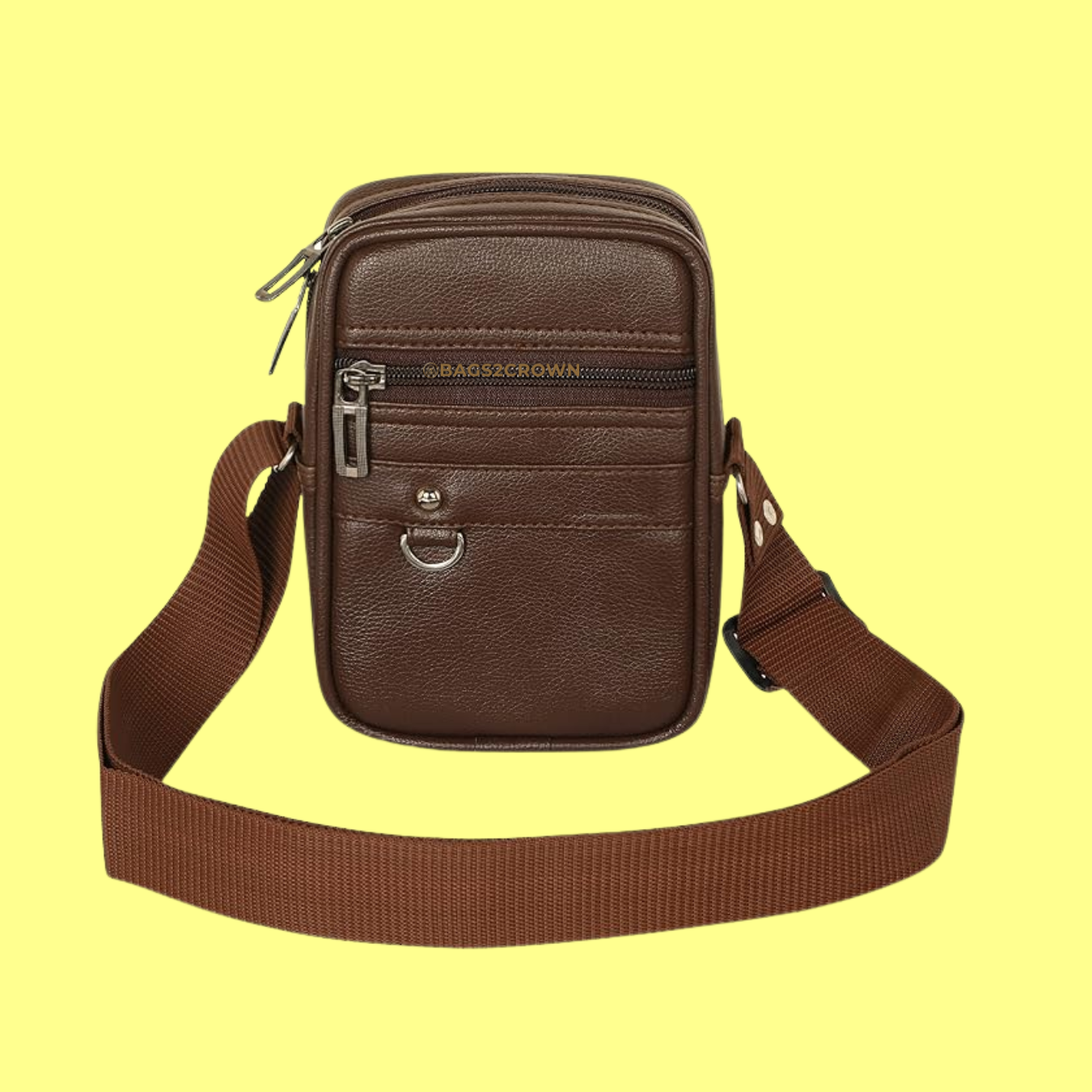 Sling & Crossbody BagsCompact everyday slings for promotions, retail and merchandise.View Products
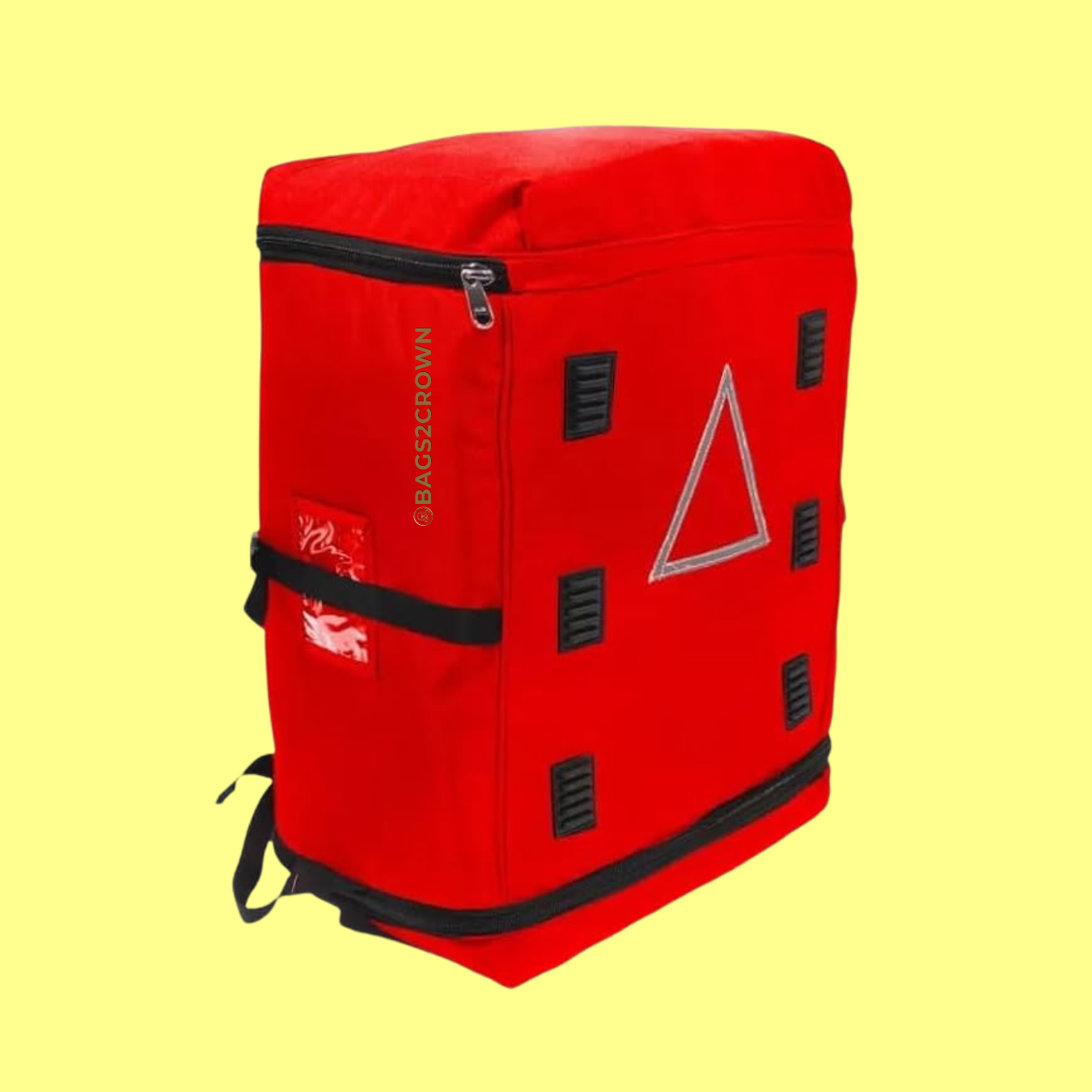 Delivery BagsInsulated last-mile delivery bags for food and e-commerce fleets.View Products
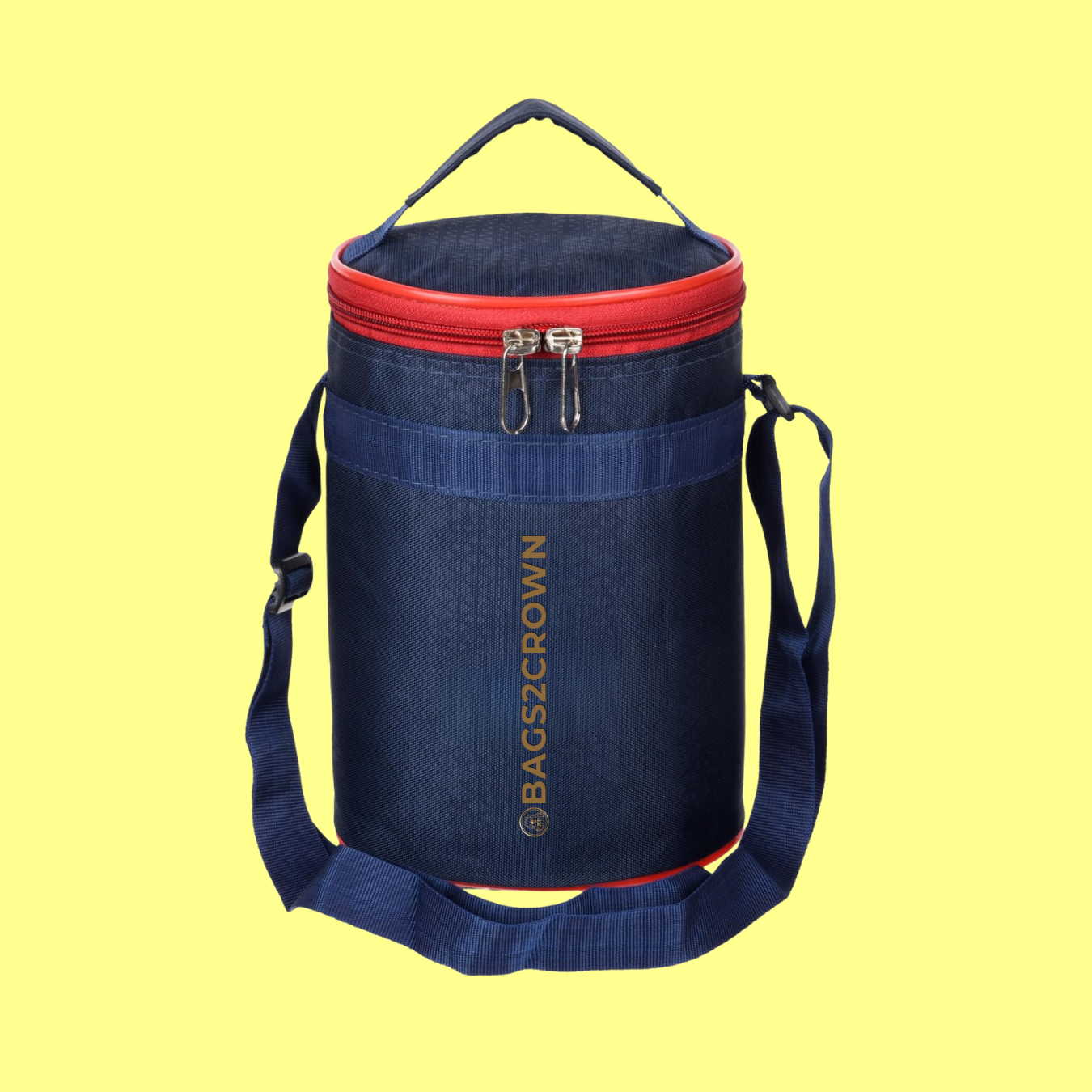 Tiffin & Insulated Lunch BagsThermal tiffin and lunch carriers for gifting and retail packs.View Products
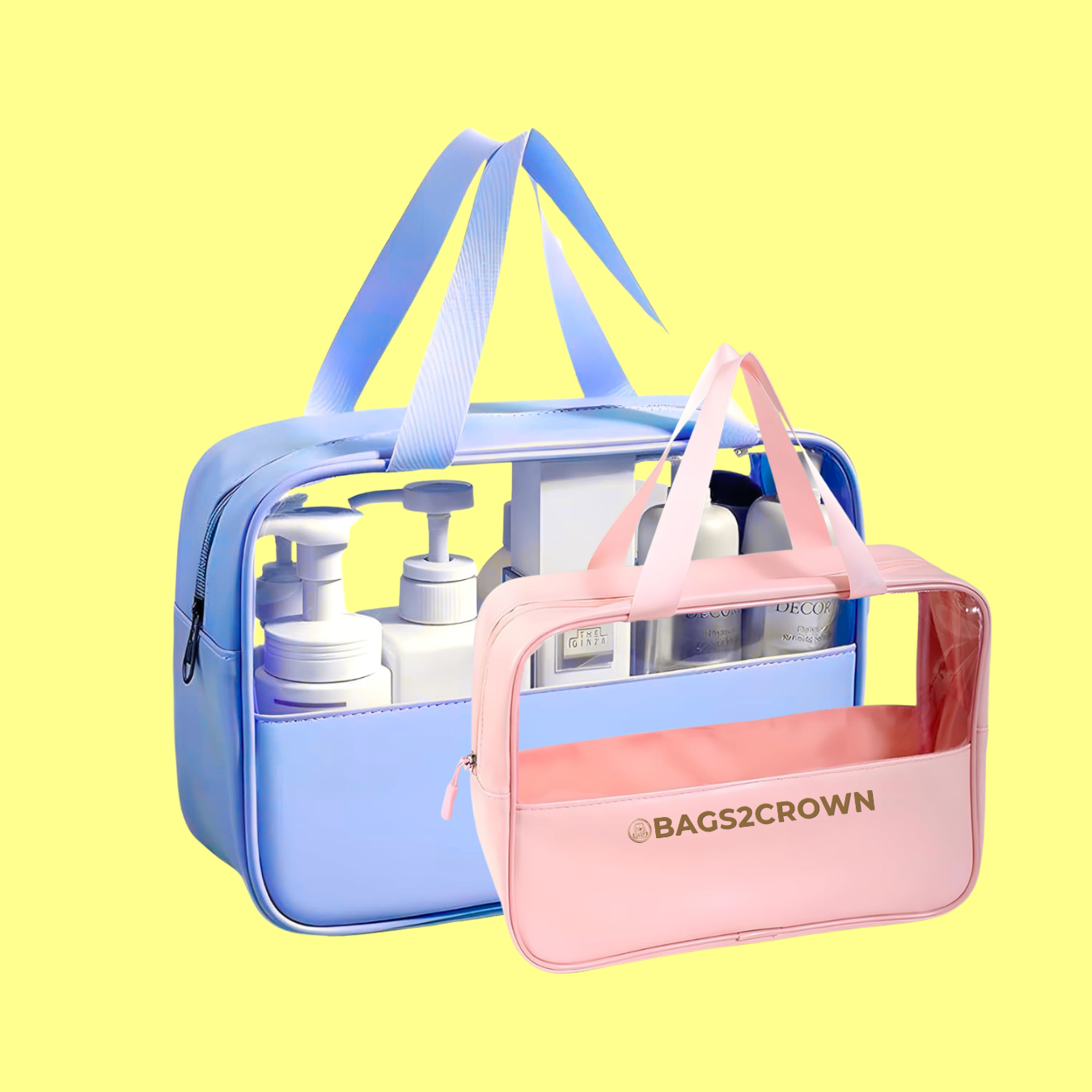 Cosmetic & Pouch BagsTravel pouches, kits and organisers for hampers and gift sets.View Products
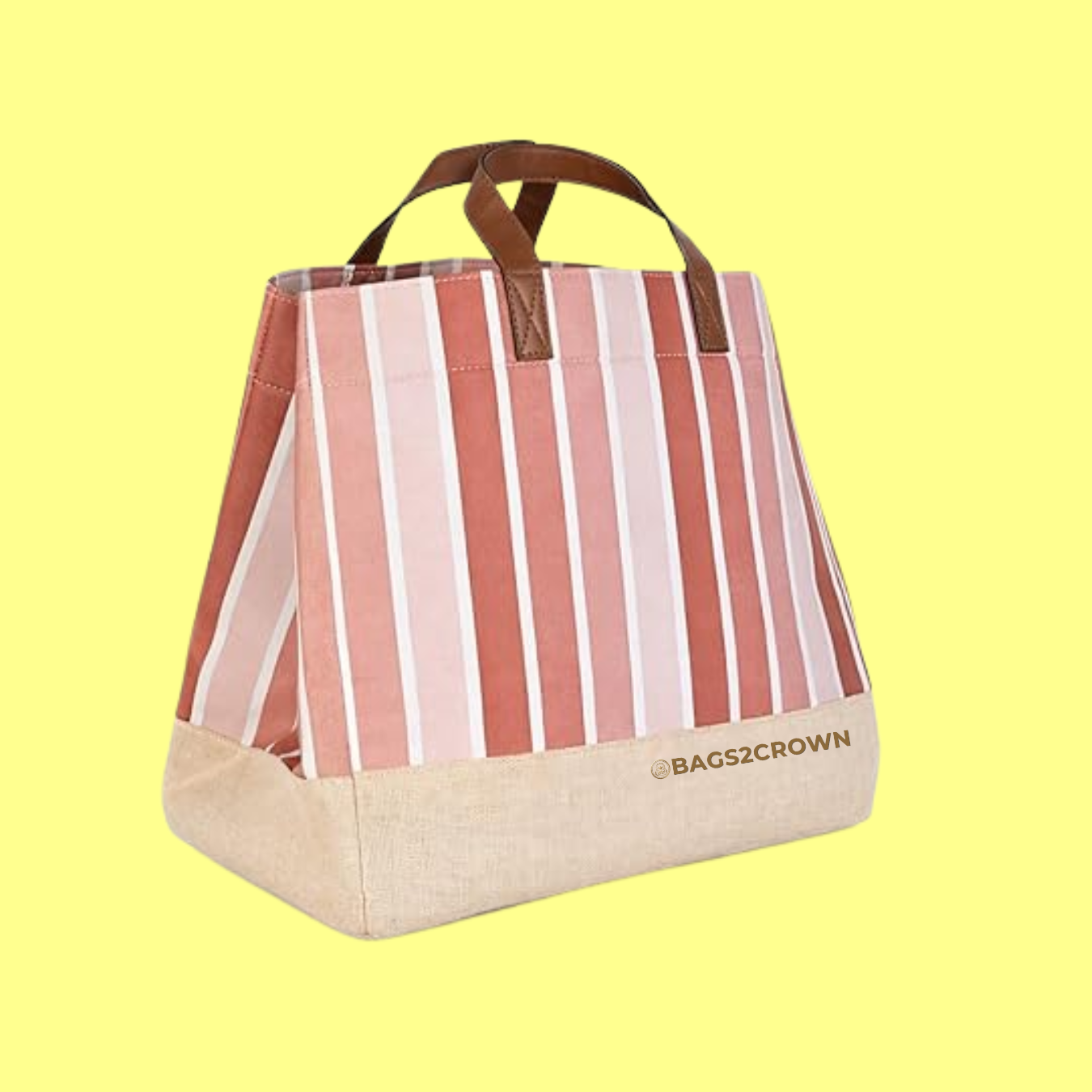 Jute BagsEco-friendly jute and cotton bags for events and sustainable branding.View Products
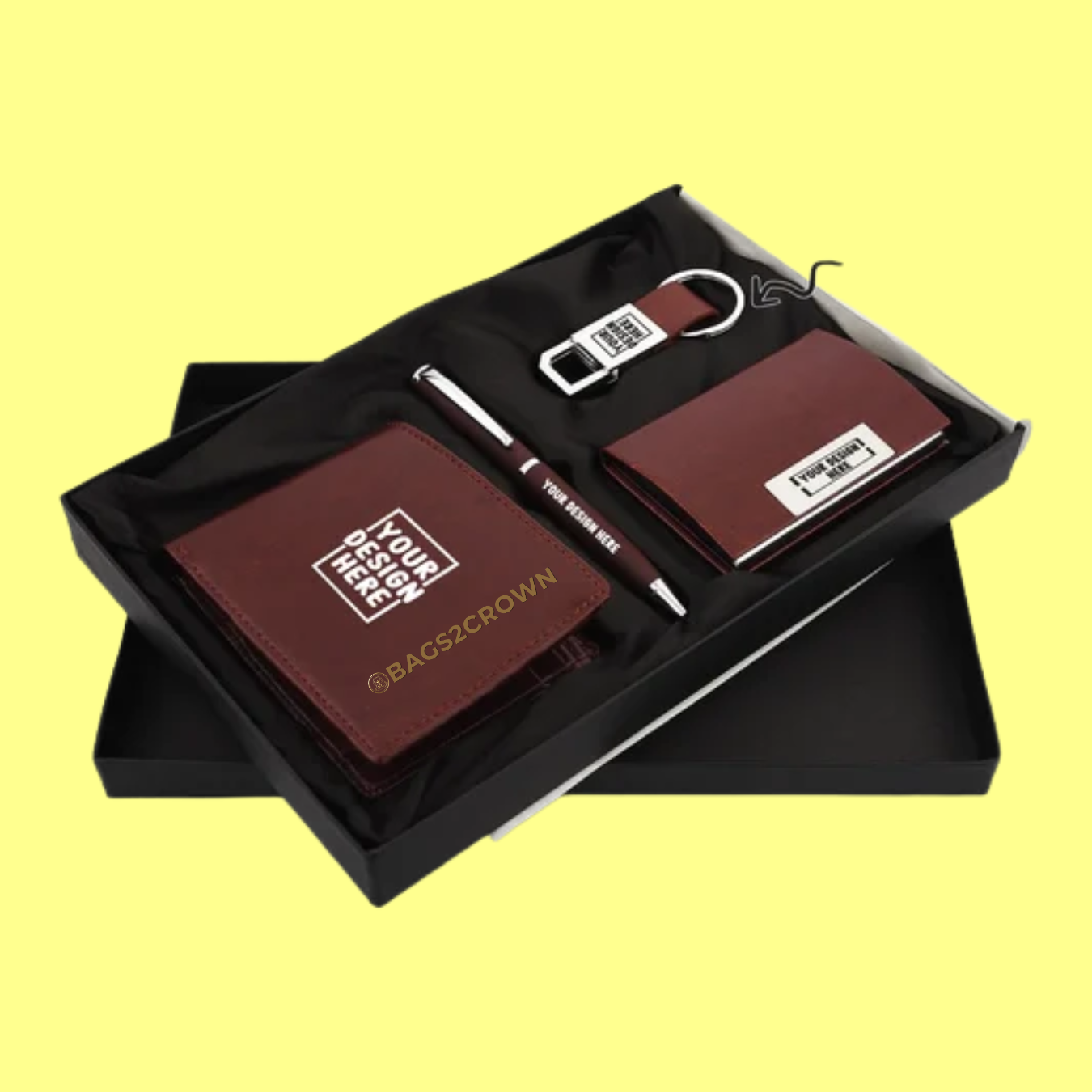 Corporate Gifts ItemsComplete branded gifting kits, assembled and packed to order.View Products
Companies, distributors and wholesalers — share your requirements. Contact us by call, WhatsApp or email enquiry.